I have stood inside more than 110 UNESCO World Heritage Sites. Here are 12 more from India that stopped me, slowed me down, and taught me something a guidebook never could.
There is a particular silence inside a UNESCO site that has no visitors yet. Not emptiness. Expectation. I have spent twenty years chasing that silence, arriving before gates open, waiting for a light that only shows up once, pressing a shutter at the exact moment a place reveals itself. India has 44 UNESCO World Heritage Sites. I have been to most of them with a camera in hand. Part 1 of this guide covered 10. This is Part 2. These 12 sites are as different from each other as Goa is from Assam. But every one of them gave me an image I still think about.
In This Guide
- Agra Fort, Uttar Pradesh
- Kaziranga National Park, Assam
- Churches and Convents of Goa
- Buddhist Monuments at Sanchi, Madhya Pradesh
- Qutub Minar and its Monuments, Delhi
- Red Fort Complex, Delhi
- The Jantar Mantar, Jaipur, Rajasthan
- Historic City of Ahmedabad, Gujarat
- Champaner-Pavagadh Archaeological Park, Gujarat
- Chhatrapati Shivaji Maharaj Terminus, Maharashtra
- Elephanta Caves, Maharashtra
- Victorian Gothic and Art Deco Ensembles of Mumbai
1. Agra Fort | Uttar Pradesh
UNESCO Inscribed: 1983 | Type: Cultural | Best Light: Golden hour from the Musamman Burj tower, facing west toward the Taj Mahal
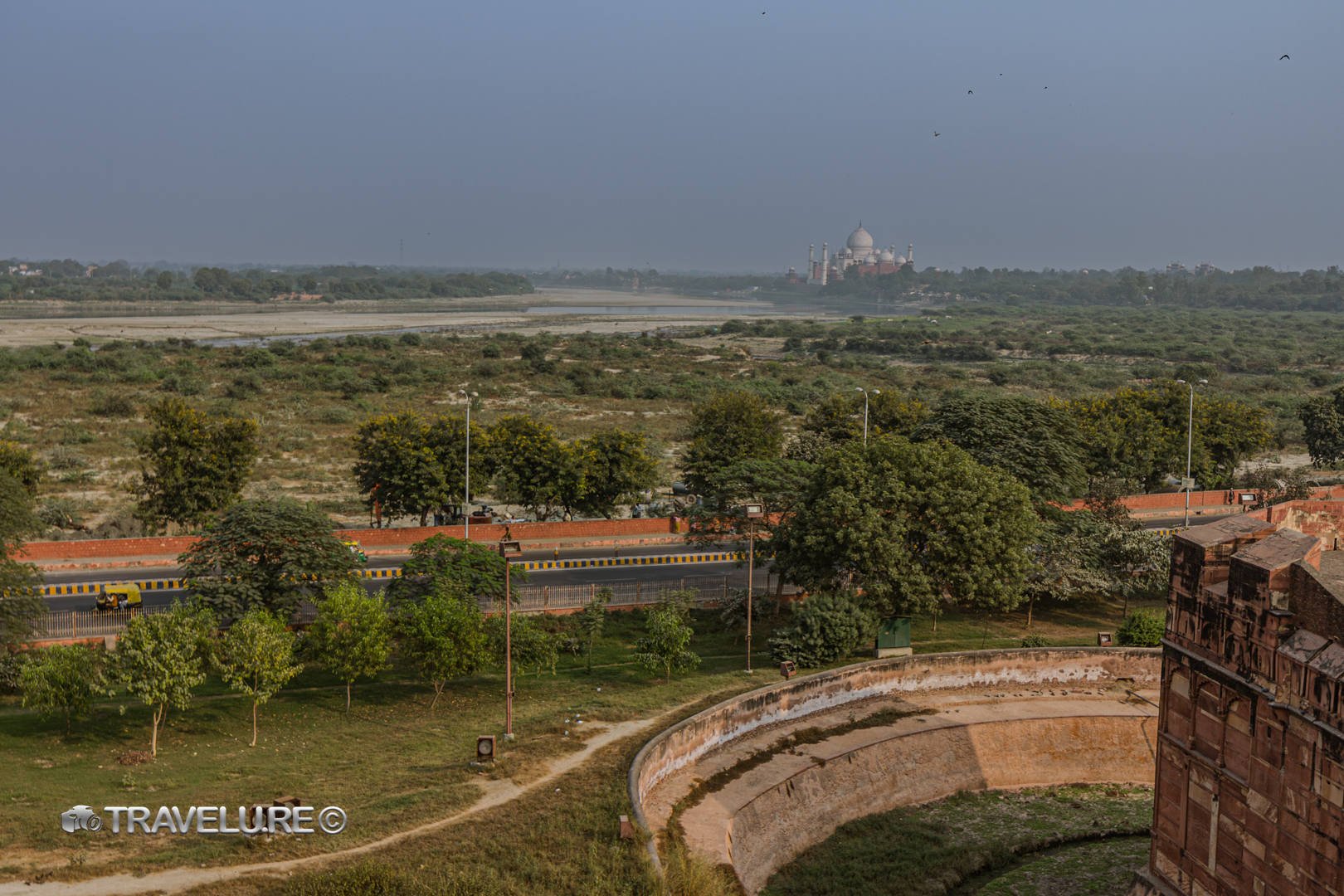
Most people who come to Agra spend their energy on the Taj and treat Agra Fort as an afterthought. That is a mistake I made on my first visit and corrected on every visit since. The Fort is where the Mughal Empire actually lived. The Taj is where they buried their dead. The Fort is where they governed, argued, imprisoned and grieved.
Shah Jahan spent the last eight years of his life imprisoned here by his own son Aurangzeb. His cell window frames the Taj Mahal across the river. I spent a long time at that window. It is one of the most charged viewpoints in India. An emperor, the greatest builder the subcontinent ever produced, confined to a room where his only view was the monument to his dead wife. The light at dusk turns the marble distant and blue. It does not feel like sightseeing. It feels like bearing witness.
The Fort also contains the Sheesh Mahal, a mirrored hammam where every surface is inlaid with tiny convex mirrors. I photographed it from an unusual low angle, almost flat on the floor, looking up into the ceiling. The reflections multiply into something vertiginous, a tunnel of light that has no obvious end. It is not the obvious photograph of this room, and that is precisely why it works.
📷 Photographer’s Tip: Position yourself at the Musamman Burj window roughly 40 minutes before sunset. The Taj Mahal sits almost due west. Use the 70-200mm at 200mm to compress the distance and pull the Taj into the frame. Shoot at f/8 for sharpness across both foreground arch and distant monument. ISO 400 is enough in that window light. Expose for the exterior view and let the foreground arch fall to shadow.
Read the full Agra Fort story on Travelure
2. Kaziranga National Park | Assam
UNESCO Inscribed: 1985 | Type: Natural | Best Light: First jeep safari at 06:00 in October-November when mist sits on the flood plains and the grass is still golden
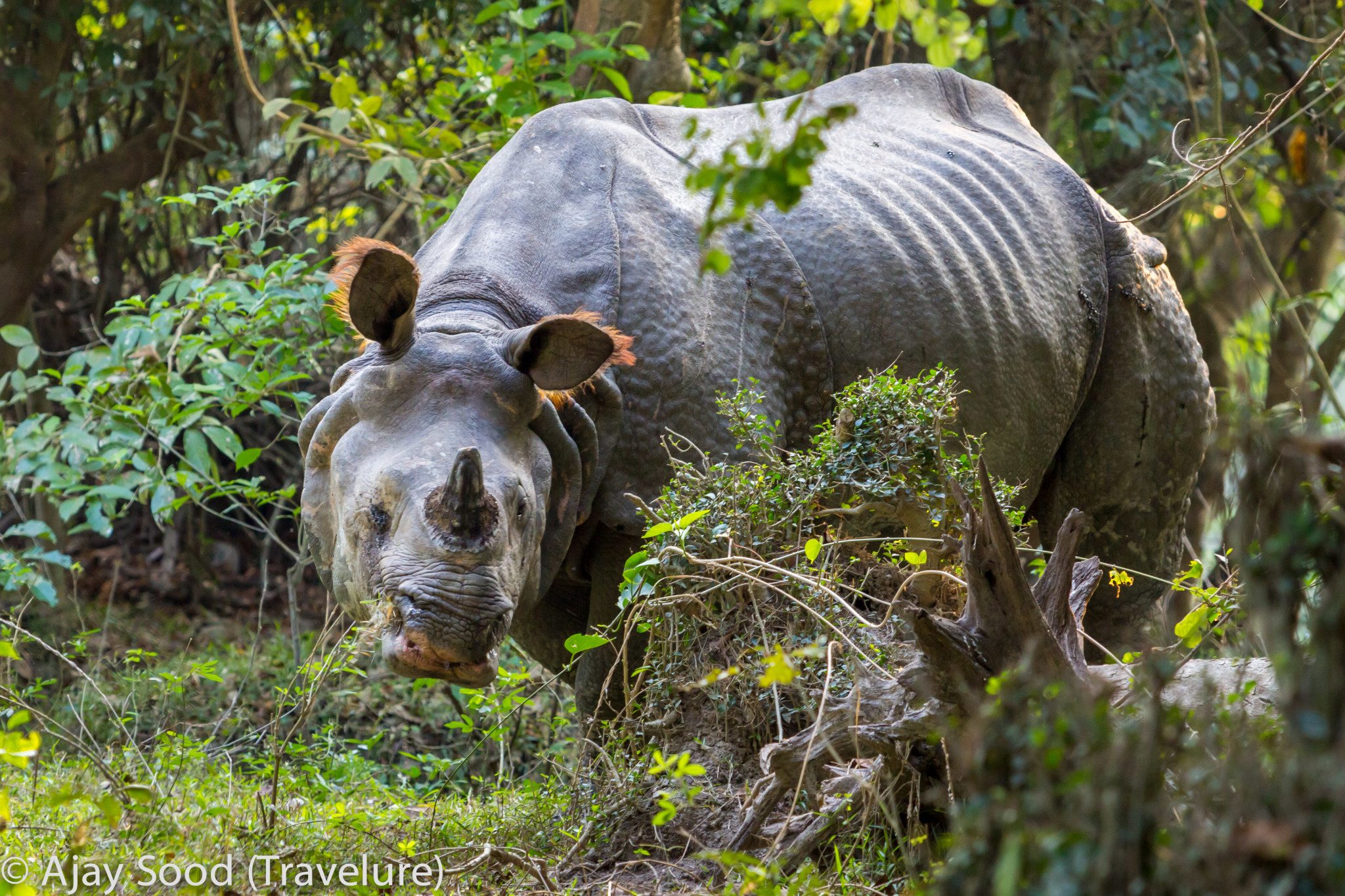
Kaziranga holds two thirds of the world’s population of Indian one-horned rhinoceros. That fact does not prepare you for the experience of seeing one emerge from eight-foot elephant grass thirty metres from your jeep. The rhino moves with a prehistoric deliberateness. It does not acknowledge you. You are simply furniture in its landscape.
I visited during early November, the start of the high season, when the Brahmaputra floods have receded and the wildlife has returned to the plains. My driver had been running safaris in the central range for years. He stopped the jeep at a precise spot I would never have identified and cut the engine. We waited. A rhino cow and calf stepped into the clearing as if on schedule. He said nothing. He had done this before.
Kaziranga also has elephants, wild water buffalo, swamp deer, and a dense population of tigers, though tigers rarely show themselves in the grass. The birding is extraordinary: greater adjutant storks, grey-headed fish eagles, Pallas’s fish eagles fishing the wetlands. It is one of the few places in India where you must make a genuine choice about which direction to point the camera.
📷 Photographer’s Tip: Book the earliest permitted jeep safari and request the central range for rhino density. The Leica P&S at its 400mm end gives you genuine reach from the jeep without needing to change anything. Use aperture priority at f/6.3 with a minimum shutter of 1/800s to freeze movement. The grass backlit by early sun creates a beautiful amber separation from the animal. Do not try to get closer. The best images come from the rhino being entirely unaware of you.
Read the full Kaziranga story on Travelure
3. Churches and Convents of Goa
UNESCO Inscribed: 1986 | Type: Cultural | Best Light: Basilica of Bom Jesus in the mid-morning before the tour groups arrive; Se Cathedral at late afternoon for the Portuguese whitewash to glow
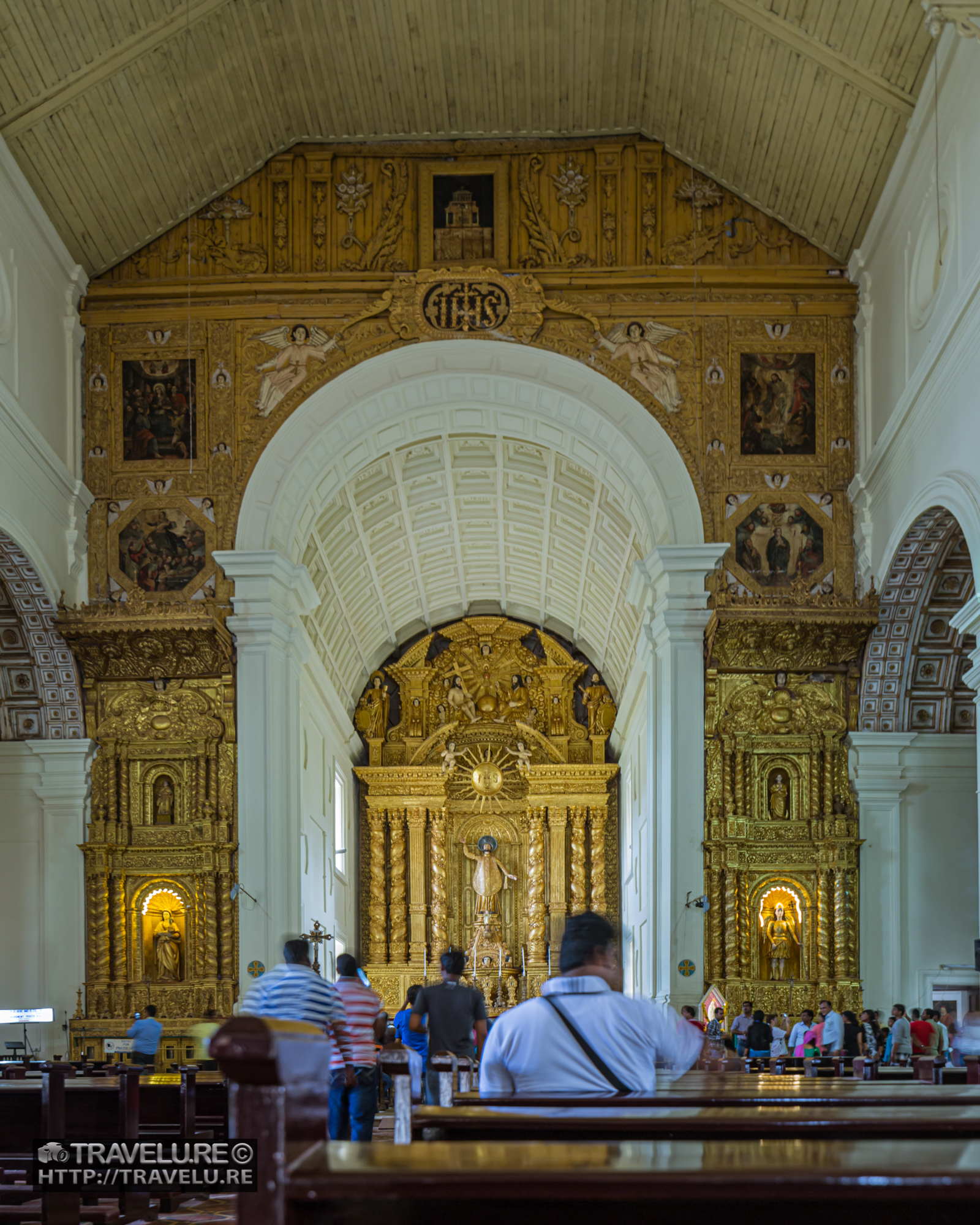
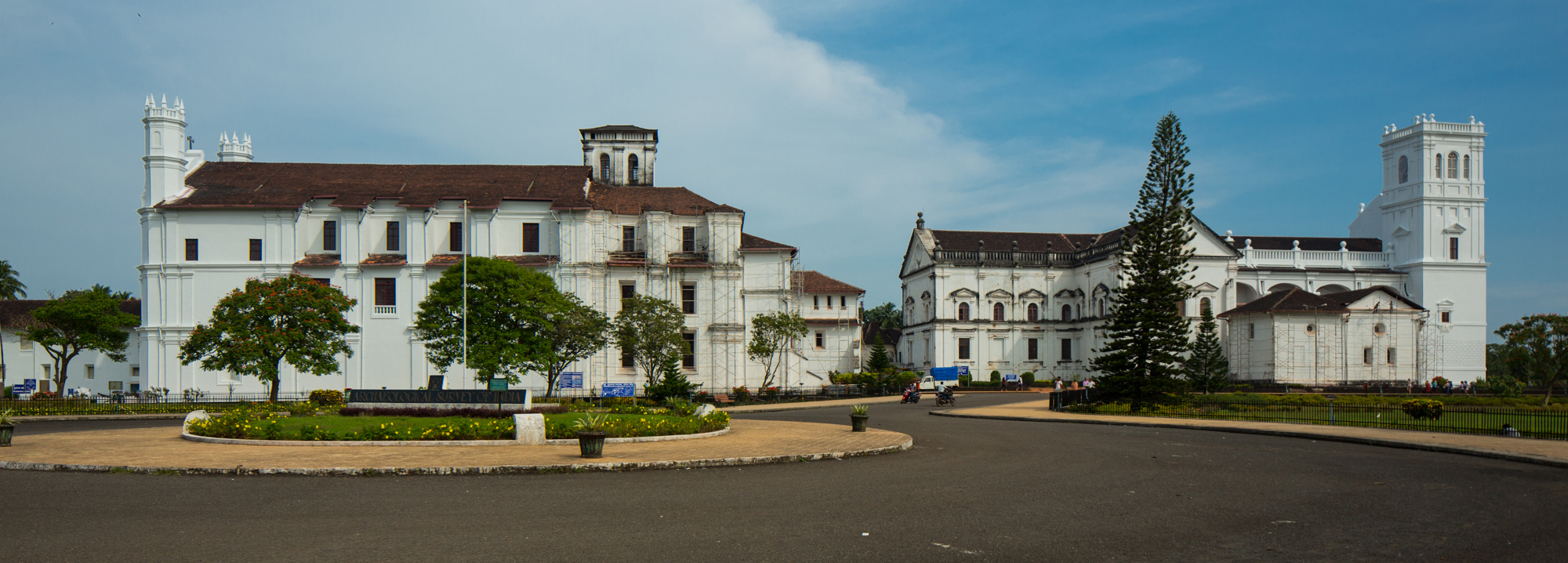
Old Goa does not feel like India. That is both its historical weight and its photographic gift. Four hundred years of Portuguese rule pressed European Baroque into a tropical coastline and the result is something that exists nowhere else on earth. The Basilica of Bom Jesus contains the mortal remains of St. Francis Xavier, patron saint of the East. The body, over 400 years old, is displayed in a silver casket in a state of partial preservation that the Catholic Church has declared miraculous. I am not a religious man. But I stood in that nave with my camera down and simply looked.
The Se Cathedral is the largest church in Asia. Its interior is cool and dim, with Portuguese azulejo tiles on the side chapels that turn blue in afternoon light. I found a young Goan woman sitting alone in one of the side chapels, reading. She did not move for forty minutes. I took one photograph of her from the far end of the nave, a silhouette in a shaft of light, and it remains one of my quieter images from this country.
The Church of St. Cajetan, modelled on St. Peter’s Basilica in Rome, is less visited and more melancholy. There is a crypt beneath the altar where Portuguese governors were once buried. On the morning I visited, a gardener was mowing the grass outside with a petrol mower, and the sound drifted into the nave, and the collision of the sixteenth century and the twenty-first century felt like Old Goa in a single sentence.
📷 Photographer’s Tip: The Basilica of Bom Jesus is built from laterite, a red-brown stone that absorbs warm light rather than reflecting it. Use the 17-40mm and shoot the facade from the far end of the square to keep the proportions honest. For the interior, brace the camera against a pew and shoot at 1/15s handheld, which is workable at 17mm. Keep ISO at 800 maximum. Flash is prohibited and ruins the atmosphere anyway.
Read the full Old Goa churches story on Travelure
4. Buddhist Monuments at Sanchi | Madhya Pradesh
UNESCO Inscribed: 1989 | Type: Cultural | Best Light: Mid-morning when the sun is high enough to bring out the carving detail on the toranas without the flatness of midday; late afternoon for warm sandstone tones on the stupa dome
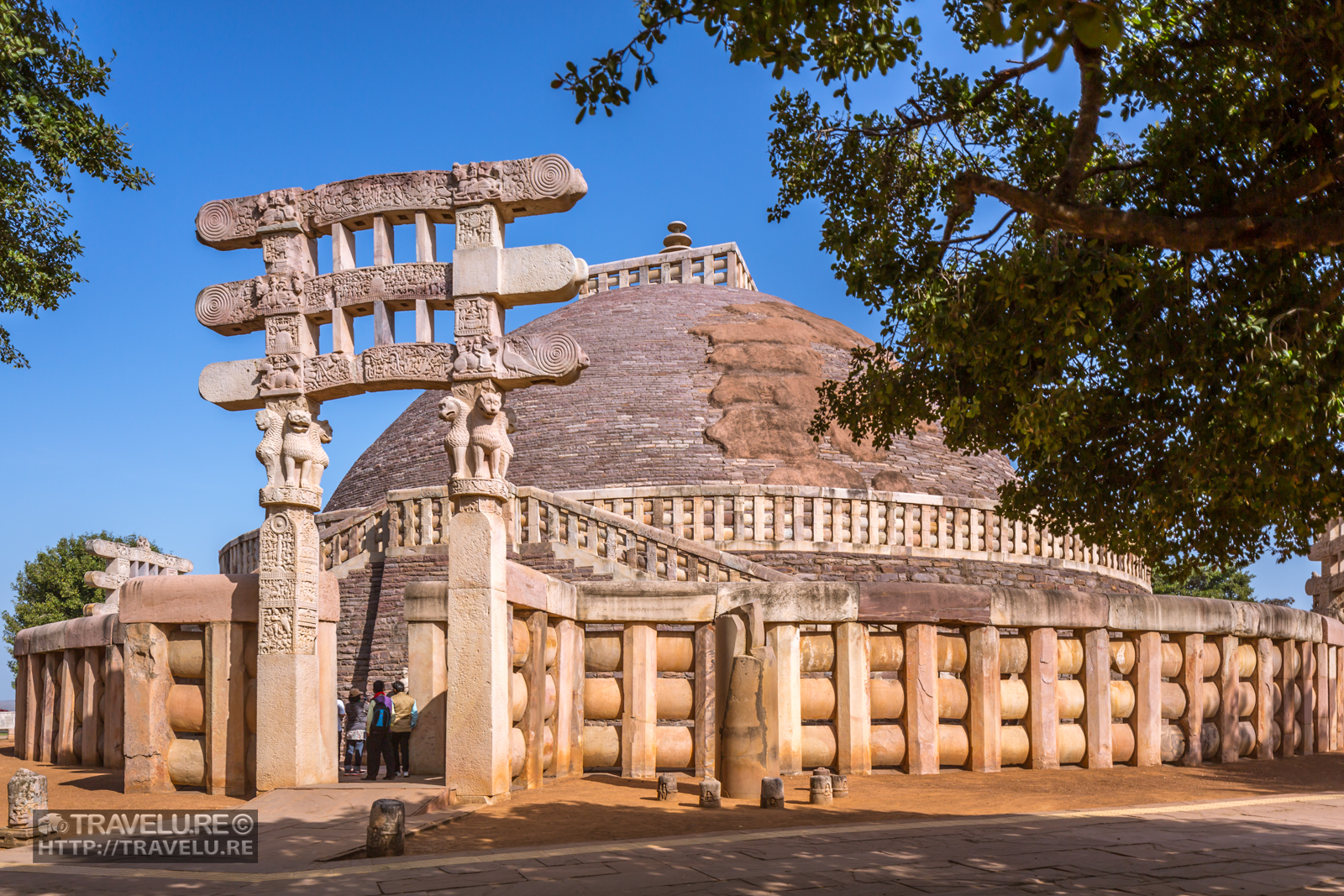
Sanchi sits on a low hill in a quiet stretch of Madhya Pradesh that most tourists drive past on the way to somewhere else. That is precisely why I love it. The Great Stupa is the oldest stone structure in India. It was begun by Emperor Ashoka in the third century BCE and completed by the Satavahana dynasty two centuries later. The four gateways, the toranas, are carved with scenes from the Jataka tales with a density and vitality that make you lean forward to find details within details.
I have visited Sanchi at different times of day and the site changes personality completely between morning, midday and afternoon. The toranas in mid-morning light are crisp and readable, every figure catching shadow in the right direction. By afternoon, the stupa dome itself, that vast hemisphere of old brick, warms to a deep ochre that makes the surrounding trees read as dark contrast behind it. Both are worth the time.
What most photographs of Sanchi miss is the landscape. The stupa sits at the edge of the hill and looks out over an agricultural plain that stretches to the horizon. That view, the ancient and the agricultural, the 2,300-year-old monument and the farmer on his tractor below, is the photograph that Sanchi most wants to give you, and most visitors never walk to the edge to see it.
📷 Photographer’s Tip: The northern and eastern toranas are the most richly carved. Use the 24-70mm and work close to the relief panels at f/5.6, with the sun at an angle to the carvings so shadows define the three-dimensionality. Then walk to the southern edge of the hill compound, switch to the 17-40mm, and shoot the stupa with the plain behind it. That landscape frame is the image Sanchi rarely gets. In the afternoon, the dome turns a warm ochre, which rewards a tighter 70-200mm composition of just the hemisphere against sky.
Read the full Sanchi story on Travelure
5. Qutub Minar and its Monuments | Delhi
UNESCO Inscribed: 1993 | Type: Cultural | Best Light: Winter morning for the minar in low sun; or a lunar eclipse night if you are willing to go through the ASI permission process
The Qutub Minar is 72 metres tall and was begun in 1193, which makes it the oldest minaret to survive in the Indian subcontinent. The numbers are extraordinary. The execution is more extraordinary. The calligraphy carved into the five tapering storeys is not decoration. It is a record of the Quran in red sandstone, inscribed at a height that no human reader could ever reach. It was made for God to read, not for visitors. That intention is visible in the scale and in the quality of the carving.
The Quwwat-ul-Islam mosque, the first mosque built in India after the Islamic conquest, was constructed partly from the materials of 27 demolished Hindu and Jain temples. You can still see the original temple columns, some with chains and bells still carved into them, repurposed into the mosque’s colonnaded hall. This is not comfortable history. It is honest history. I find it more interesting than a monument built from scratch.
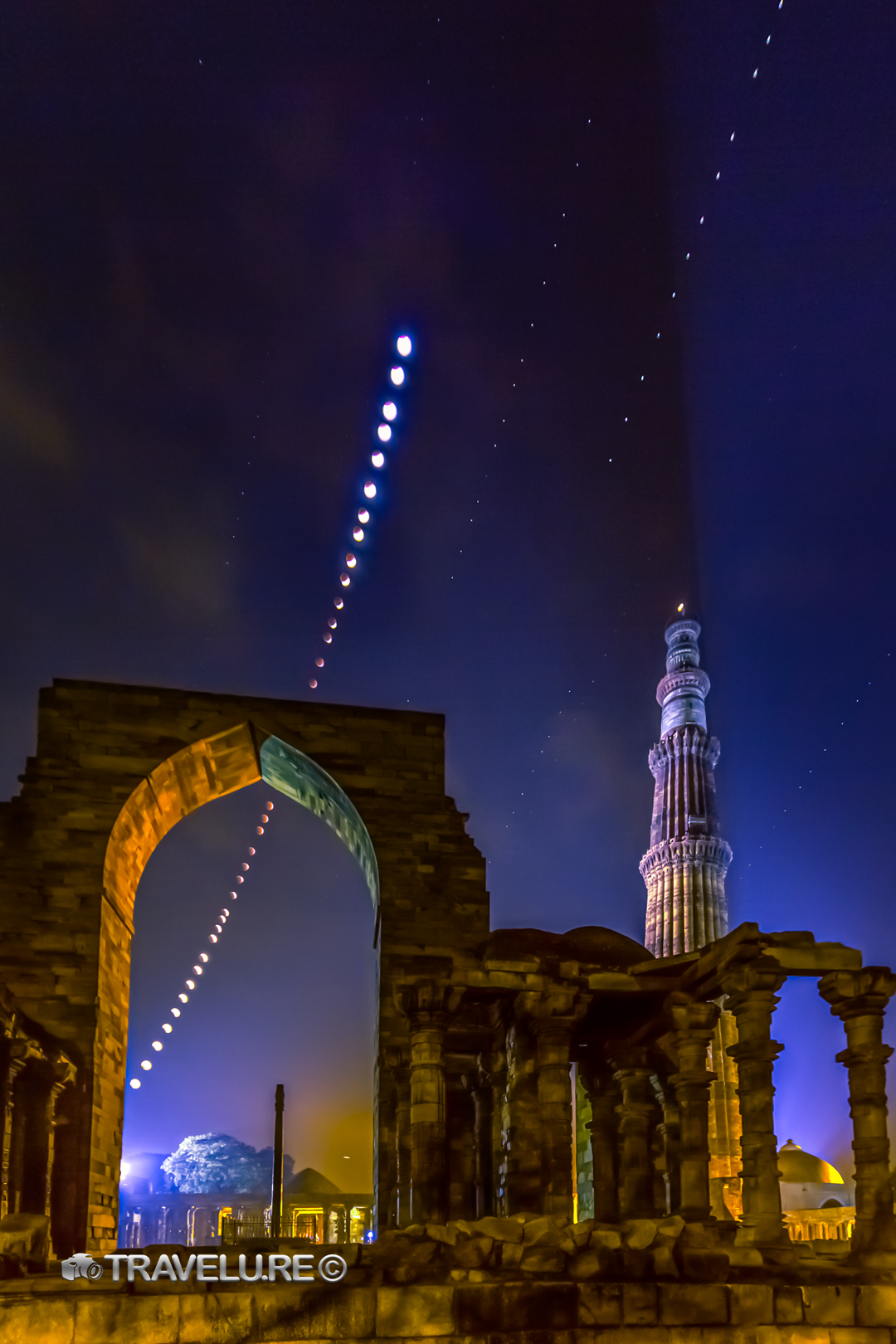
The image above required two separate permissions from the Archaeological Survey of India: one for a night shoot inside the complex after closing, and one for tripod use. I applied for both specifically to photograph a total lunar eclipse from inside the Quwwat-ul-Islam mosque ruins. What you are looking at is three hours of the moon’s arc across the Delhi sky, captured in 36 frames shot five minutes apart and composited into a single image. The blood moon sits just above the crown of the pointed arch at totality. The Qutub Minar rises to the right, lit against a sky that shifts from deep blue to amber at the horizon. I have photographed this monument in every kind of light. Nothing came close to this night.
📷 Photographer’s Tip: In daylight, the classic low-angle upward shot of the minar works best with the 17-40mm at its widest end. Position yourself at the base and shoot straight up with the sky as negative space. Winter mornings give you a blue sky rather than the washed-out white of summer. For the mosque ruins with their temple columns, use the 24-70mm at 35mm and work the shadows between columns at 08:00 when the light cuts horizontally through the colonnade. The depth and repetition reward patience.
Read the full Qutub Minar story on Travelure
6. Red Fort Complex | Delhi
UNESCO Inscribed: 2007 | Type: Cultural | Best Light: Late afternoon when the red sandstone walls warm to amber; or the Sound and Light show at dusk for atmosphere without photography restrictions
The Red Fort was built by Shah Jahan as the centrepiece of his new capital Shahjahanabad, begun in 1638. For 200 years it was the seat of Mughal power. Then the British used it as a military garrison. Then the Indian Army used it as a military garrison. The archaeology has been stripped and rebuilt and interpreted and misinterpreted across 400 years of occupation, and what you see today is a layering of all those occupations, not a pristine monument.
I find this honest. The Lahori Gate, the main entrance, is the gate from whose ramparts Jawaharlal Nehru addressed the nation at midnight on 15 August 1947. Every Prime Minister since has addressed India from this gate on Independence Day. The gate is more than sandstone. It is a symbol so charged that it is difficult to look at it as a photographer and separate the object from its meaning. I eventually stopped trying and just let the meaning be part of the frame.
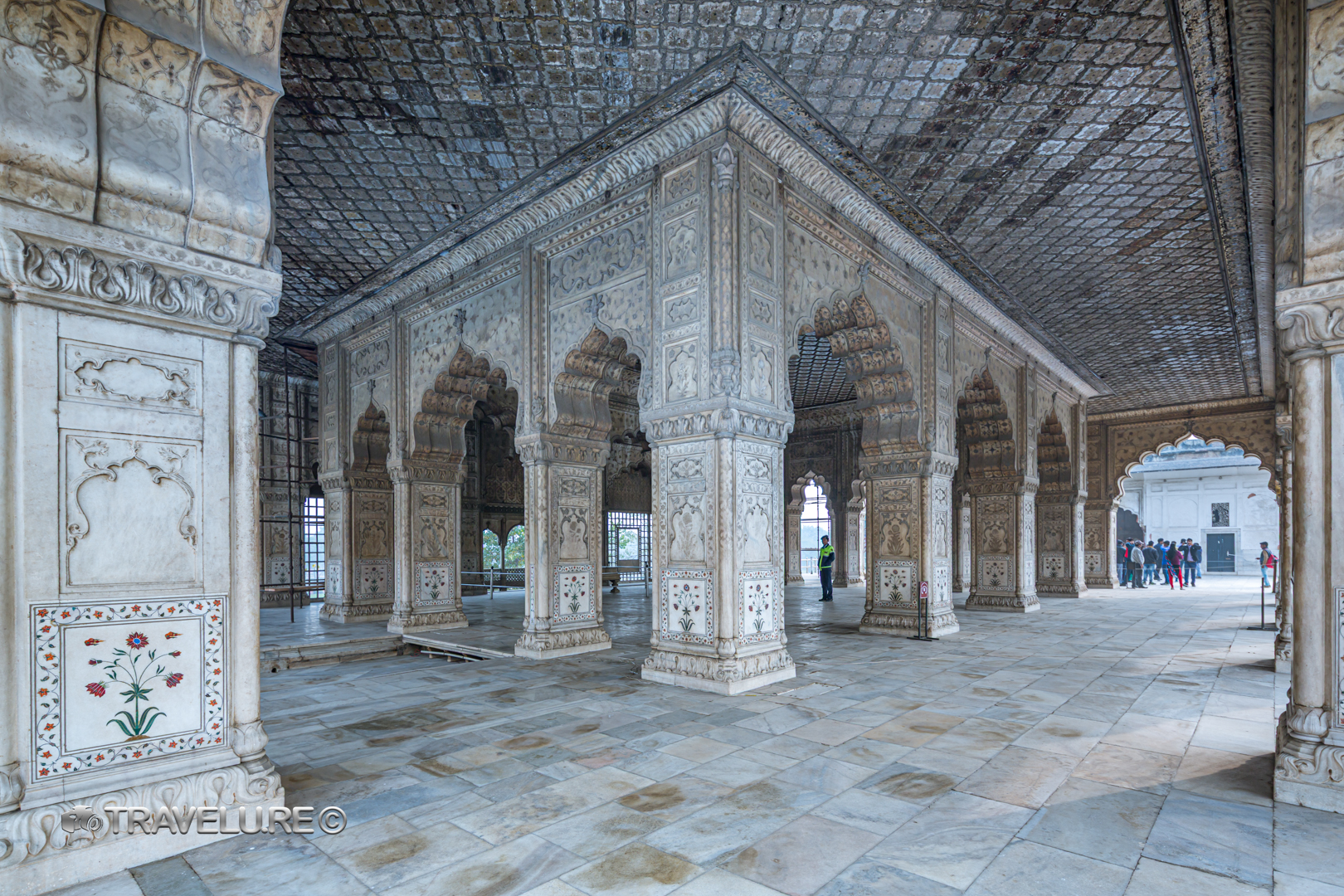
The Diwan-i-Khas, the Hall of Private Audiences, carries an inscription by the poet Amir Khusrow on its corner arches: “If there be a paradise on earth, it is this, it is this, it is this.” The Peacock Throne that once stood here was looted by Nader Shah of Persia in 1739. The room is now largely empty. I photographed it from the doorway with the 17-40mm and let that emptiness fill the frame.
📷 Photographer’s Tip: The external walls photograph better than the interiors for colour and scale. Stand on the road outside the Lahori Gate one hour before sunset. Use the 24-70mm at 35mm. The red sandstone turns a deep copper in that light and the massive walls read with their full weight. Inside, the Diwan-i-Khas works at f/4, ISO 800, using natural light from the open sides. Do not use flash. The white marble reads best in even, diffused light.
Read the full Red Fort story on Travelure
7. The Jantar Mantar, Jaipur | Rajasthan
UNESCO Inscribed: 2010 | Type: Cultural | Best Light: Morning between 09:00 and 11:00 when the Samrat Yantra shadow moves visibly across the scale; late afternoon for warm stone tones
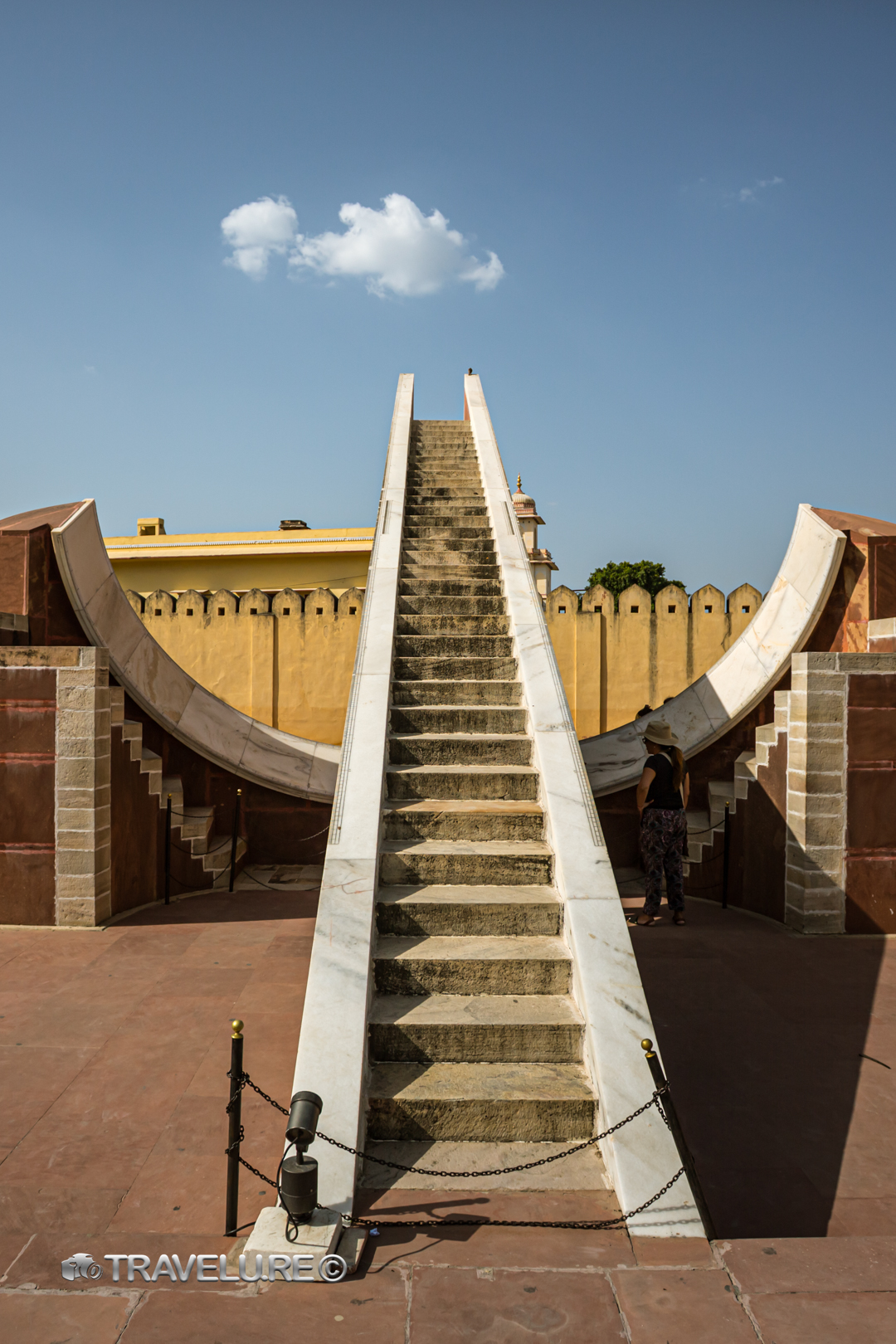
The Jantar Mantar in Jaipur is an astronomical observatory built by Maharaja Jai Singh II between 1724 and 1735. It is not one instrument. It is nineteen. The largest, the Samrat Yantra, is a 27-metre-tall sundial that can tell time to an accuracy of two seconds. A two-second accuracy in 1724. I have stood next to it and watched the shadow move. You can see it move. That is the point. This instrument was built to make the invisible visible.
Most visitors walk through the Jantar Mantar in thirty minutes and leave confused. Spend two hours and hire a guide who understands the science, not just the history. The instruments are not symbolic. They are working. The Jai Prakash Yantra is a concave marble bowl with a suspended ring that tracks the position of the sun and stars. The Ram Yantra is two cylindrical structures that together measure the altitude and azimuth of celestial bodies. Understanding what you are looking at changes what you see and changes what you photograph.
My clearest memory of Jantar Mantar is of a retired schoolteacher from Jaipur who was explaining the Misra Yantra to a group of young students. He was using his hands to trace the invisible path of the sun. The students were twelve years old and paying complete attention. The Misra Yantra behind them was 290 years old. I photographed the scene rather than the instrument.
📷 Photographer’s Tip: The Jantar Mantar rewards a wide-angle lens and a sense of abstraction. At the 17mm end of the 17-40mm, the giant forms become geometric sculptures rather than scientific instruments. Shoot the Samrat Yantra from the base looking up the hypotenuse for maximum drama. The Ram Yantra’s twin cylindrical walls at 09:00 create a pattern of light and shadow inside the cylinders that reads as pure geometry. Move slowly and look for compression and repetition.
Read the full Jantar Mantar story on Travelure
8. Historic City of Ahmedabad | Gujarat
UNESCO Inscribed: 2017 | Type: Cultural | Best Light: Morning when the sun enters the pol lanes and hits the carved wooden facades directly; late afternoon for warm tones on the havelis
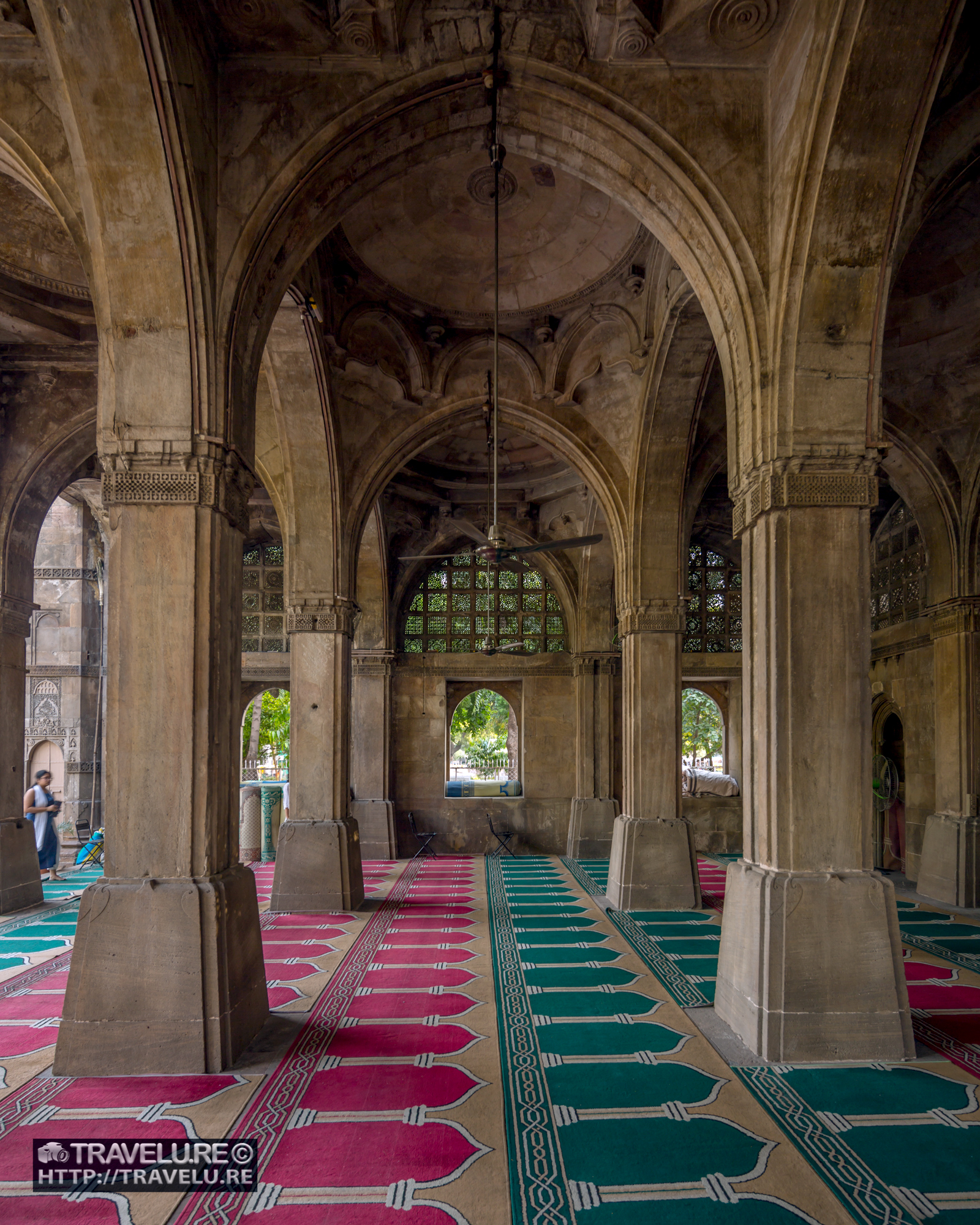
Ahmedabad became India’s first city to receive UNESCO World Heritage status, in 2017. The recognition covers the historic walled city, and specifically the remarkable neighbourhood structure of pols, tightly clustered residential quarters built around shared courtyards, with carved wooden gates, bird feeders, and community temples at the ends of narrow lanes. This is not a museum. People live here. Laundry hangs from the carved wooden balconies. Children run through the lanes. A mechanic operates from a workshop in a 400-year-old haveli whose facade is more elaborately carved than most palaces I have visited in Europe.
The pol lanes are narrow and the light arrives in them briefly, depending on their orientation. That brevity is the gift. When direct sun hits a carved wooden facade in one of these lanes, the grain of the timber and the depth of the carving become something else entirely. You are not photographing a building. You are photographing 400 years of someone’s craft.
The Sidi Saiyyed Mosque contains the jali screens that have become one of the most photographed architectural details in India. The tree of life pattern, carved in a single piece of stone, achieves something that seems physically impossible. It is as fine as lace and as structured as mathematics. I have photographed it more than once and I still do not entirely understand how it was made.
📷 Photographer’s Tip: The pol lanes are narrow and shaded, with light only hitting the carved facades for a brief window as the sun crosses the lane. Work out the cardinal orientation of the lane in advance and time your visit accordingly. Use the 24-70mm at 35mm or 50mm at f/4. For the Sidi Saiyyed jali, the light is diffused through the screen itself, which gives you soft, even illumination. Shoot at f/8, ISO 400, with the camera braced against a nearby wall or window frame.
Read the full Ahmedabad story on Travelure
9. Champaner-Pavagadh Archaeological Park | Gujarat
UNESCO Inscribed: 2004 | Type: Cultural | Best Light: Mid-morning to early afternoon when the carved stone screens on the Jama Masjid facade catch angled sun; late afternoon for the hilltop view over the ruins
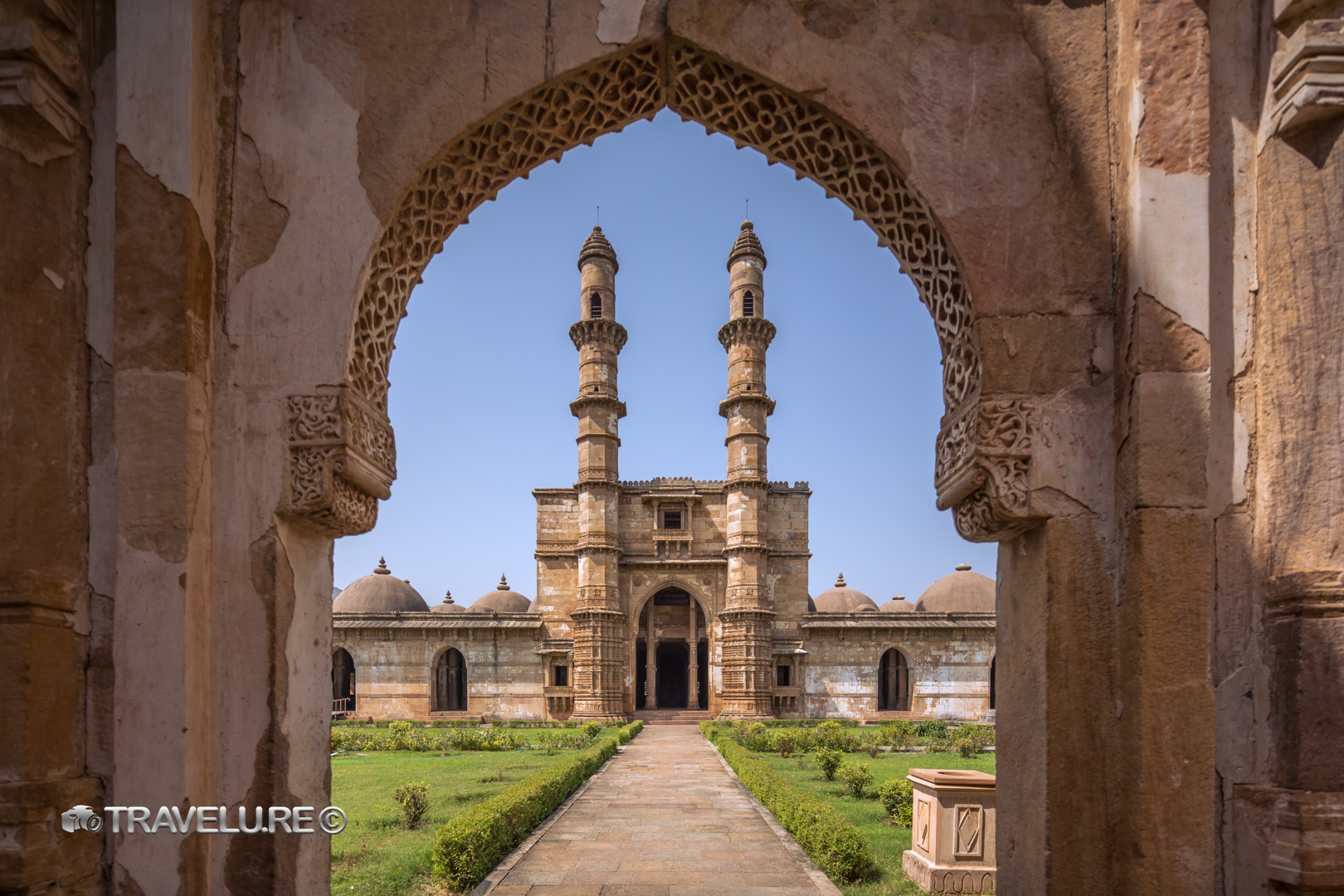
Champaner-Pavagadh is one of the least visited UNESCO sites in India and one of the most extraordinary. The fortified city of Champaner was the capital of the Gujarat Sultanate in the fifteenth and sixteenth centuries, then conquered and abandoned. What remains is a 14th-16th century city lying largely as it was left, mosques, palaces, step-wells and citadels distributed across a forested archaeological zone with very few visitor facilities and almost no tourist signage. I spent an entire day there and saw fewer than forty other visitors.
I was photographing at the site from around 11 in the morning through to about 4 in the afternoon, and the light across that window was consistently good. The Jama Masjid faces roughly east, so the facade was already well-lit by mid-morning, and the carved stone screens kept their shadows and depth through the early afternoon before the sun moved too far overhead. The interior of the prayer hall, with its columns receding into the dimness, worked at any time of day.
The Pavagadh hill behind the city is a pilgrimage site with a Hindu temple at the summit. The climb takes an hour, or a ropeway takes six minutes. I climbed. At the top, the archaeological park spreads below you as a dark canopy of forest with the geometric profiles of mosque domes appearing through the trees. That aerial perspective is the one image of Champaner that no photographer at ground level can ever take.
📷 Photographer’s Tip: The carved stone screens on the Jama Masjid facade create complex shadow patterns in angled sun that disappear completely when the light goes flat overhead. Use the 24-70mm and shoot the facade at 35mm at f/8, then move inside and use the 17-40mm at f/5.6, ISO 800 to capture the prayer hall columns receding into the interior. The dappled light through the jali screens inside is exceptional throughout the morning and into early afternoon.
Read the full Champaner-Pavagadh story on Travelure
10. Chhatrapati Shivaji Maharaj Terminus | Maharashtra
UNESCO Inscribed: 2004 | Type: Cultural | Best Light: Around sunset when the building empties of people; the entire facade needs the widest lens you have and a perfectly level camera
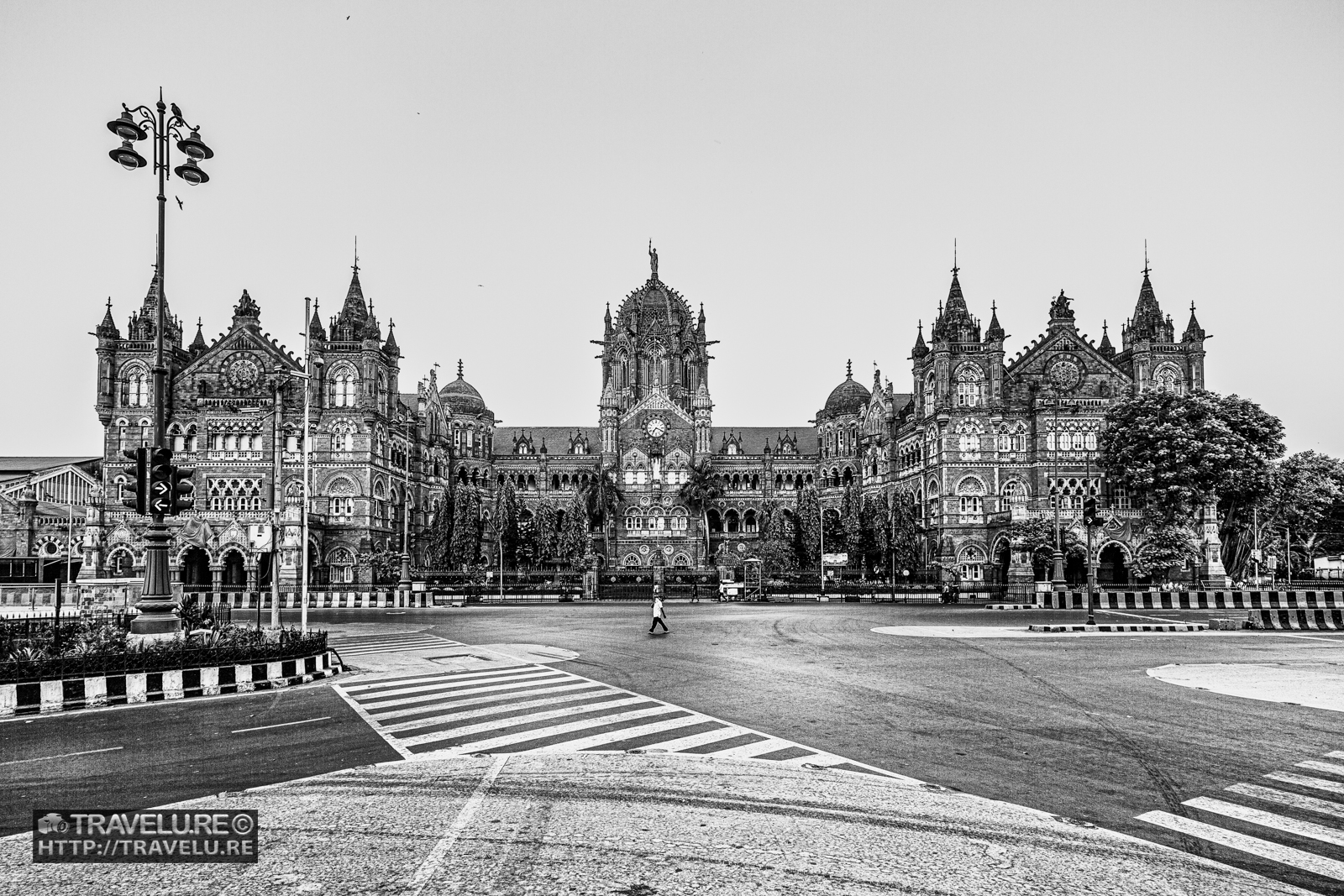
The building the British built as Victoria Terminus and which Mumbai now calls Chhatrapati Shivaji Maharaj Terminus is the greatest Victorian Gothic building outside Britain. That is not my opinion. That is the UNESCO inscription’s position. I agree with it. The building was designed by F.W. Stevens and completed in 1888. The central dome, the turrets, the gargoyles, the stone carving: Stevens took Gothic Revival and forced it into a tropical climate, and the result is something that looks like it grew here rather than was imported.
I photographed CSMT during the Covid lockdown of 2020. Mumbai was empty. I went around sunset, when the building had shed its usual crowd and the light was fading to a flat grey. I set up my tripod at the intersection opposite the main facade and shot in black and white because the monochrome stripped the building back to its architecture. That image, the entire facade with no traffic, no people, the road leading straight to the building, is one I could not have taken in any other moment in the building’s 136-year history. The pandemic was a catastrophe. That photograph is the evidence.
📷 Photographer’s Tip: CSMT is an enormous building and you need the TSE-17mm to get the whole facade from the intersection opposite. The tilt-shift capability is exactly what this building needs: keep the camera level so the verticals stay true, and use the shift to reframe without tilting. Aim for sunset on a day when foot traffic has thinned. The building’s stonework reads well in the fading light, and without people or buses cutting the road, the facade has the scale and stillness it deserves. Shoot in RAW and expose for the stonework.
Read the full CSMT Mumbai story on Travelure
11. Elephanta Caves | Maharashtra
UNESCO Inscribed: 1987 | Type: Cultural | Best Light: Mid-morning between 10:00 and 12:00 when light penetrates the cave entrance and illuminates the Trimurti panel without harsh shadows
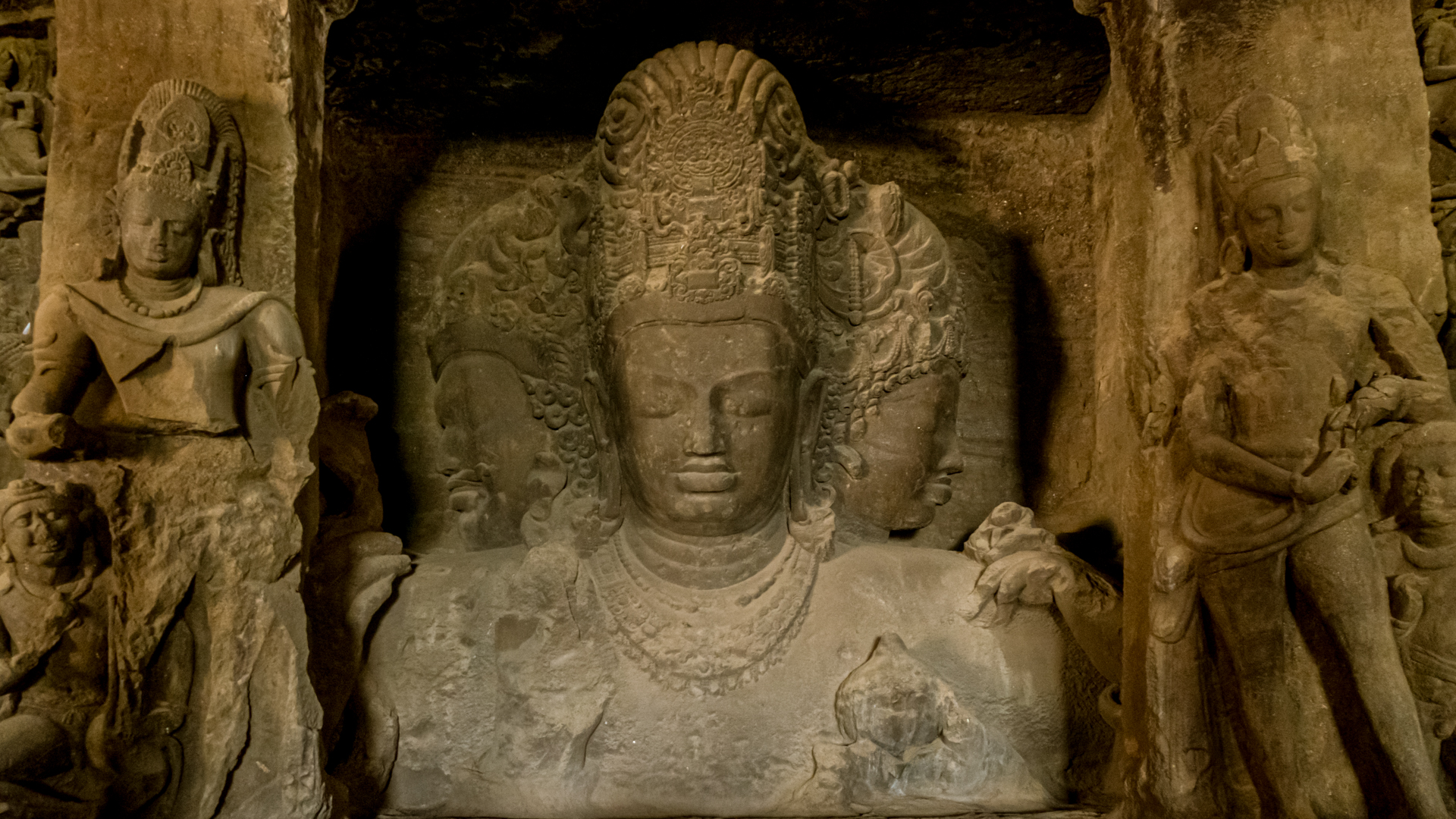
The Elephanta Caves sit on an island in Mumbai Harbour, an hour by ferry from the Gateway of India. Every time I make that crossing, the island appears out of the sea haze as something improbable: a forested hill rising from flat water, with no immediate sign of what it contains. What it contains is a series of rock-cut caves from the 5th and 6th centuries CE, hewn into basalt, containing some of the finest Shaivite sculpture ever made.
The central cave, Cave 1, is the main event. It is 40 metres wide and held up by rows of carved columns. At the back, in an apsidal chamber, is the Trimurti: a three-headed bust of Shiva, five metres tall. The central face, Tatpurusha, looks straight ahead with an expression of absolute stillness. The left face, Aghora, is fierce. The right face, Vamadeva, is feminine and contemplative. I stood in front of it for a long time. The sculpture is 1,500 years old and the expressions on all three faces are still readable across that distance.
On my last visit, a small group of schoolchildren was being brought through by a young teacher who was trying to describe the Trimurti using only hand gestures, because her voice was failing. The children were silent. The central face of Shiva behind them was silent. The quality of that shared silence in a cave that has been a place of contemplation for fifteen centuries felt like the point of the whole thing.
📷 Photographer’s Tip: The Trimurti is best photographed from directly in front, roughly 8 to 10 metres back, with the 70-200mm at 100mm or so. This gives you a natural framing through the two columns on either side of the apse. The cave interior is dark: use f/4, ISO 800, and brace against a column. At 1/15s handheld the 70-200mm will not cooperate, so the column brace is essential. The light entering from the cave entrance illuminates the central face and lets the outer faces fall into shadow, which is how the sculpture was designed to be experienced. No flash.
Read the full Elephanta Caves story on Travelure
12. Victorian Gothic and Art Deco Ensembles of Mumbai | Maharashtra
UNESCO Inscribed: 2018 | Type: Cultural | Best Light: Evening blue hour for the Victorian Gothic buildings when the sky turns deep blue and the street lights come on; sunrise for the Art Deco facades on Marine Drive
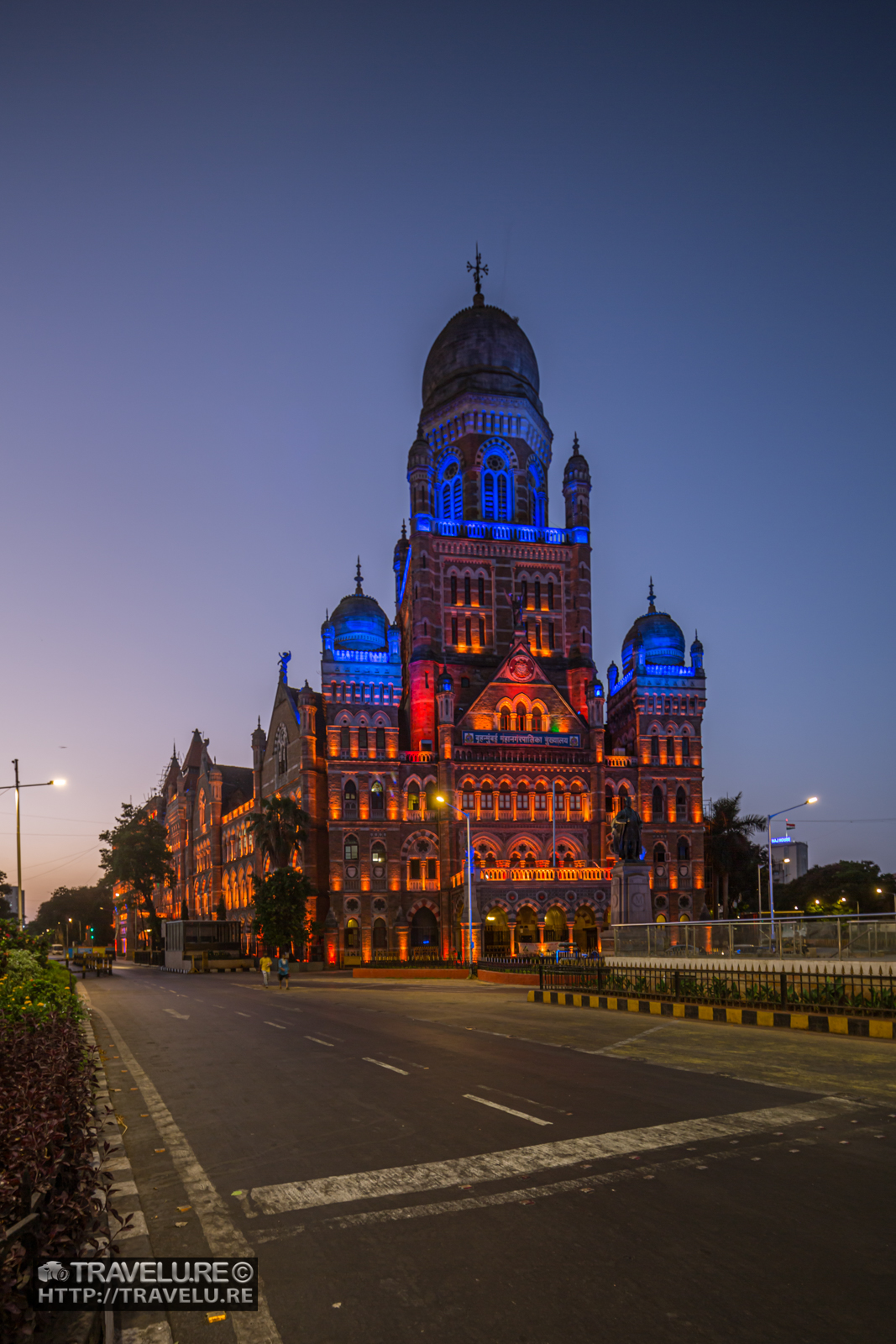
UNESCO inscribed two distinct architectural ensembles in 2018: the Victorian Gothic public buildings that face the Oval Maidan, including the Bombay High Court, the Rajabai Clock Tower, and the BMC building, and the Art Deco residential and commercial buildings that line Marine Drive on the opposite side of the Maidan. These two styles, separated by fifty years of building history, face each other across a cricket ground. It is one of the most unusual juxtapositions in world heritage.
The BMC building, the Brihanmumbai Municipal Corporation headquarters, is a particularly fierce example of the Victorian Gothic ensemble: a dome over Gothic pointed arches over rusticated basalt stonework. I photographed it at blue hour in the evening during the Covid lockdown, when the sky goes that particular shade of deep indigo that sits between last light and full dark. The dome and turrets were lit in amber and blue floodlighting. The road was empty. In that ten-minute window, the building looks like something from another century, which it is.
The Art Deco buildings on Marine Drive are a different register entirely. These are residential buildings from the 1930s and 1940s, the golden age of Bombay’s commercial prosperity, with curved balconies, terrazzo detailing, and decorative motifs that mix European streamline moderne with Indian ornament. The locals call the seafront Queen’s Necklace because of how the street lights string along the bay at night. The buildings behind those lights are less photographed than they deserve.
📷 Photographer’s Tip: For the BMC building at blue hour, position yourself at the southern end of the Oval Maidan. Use the TSE-17mm or the 17-40mm, keep the camera perfectly level so the tower verticals stay true, and shoot at f/8, ISO 800, on a tripod. The blue hour window is short, roughly 15 minutes after the last usable ambient light. For the Art Deco facades on Marine Drive, use the 24-70mm at 35mm in the morning and shoot upward at f/8 for sharpness through the curved balcony geometry.
Read the full Victorian Gothic and Art Deco Mumbai story on Travelure
Photographer’s Parting Note
Twenty-two sites across two posts. But I want to be clear about what these posts are not: they are not a checklist. The worst thing you can do with a UNESCO site is arrive, photograph the obvious angle, and leave. The sites that have given me my best work are the ones where I arrived with nothing planned and stayed until something happened.
Something always happens. A light shift. A stranger doing something ordinary in an extraordinary place. A moment where the age of the thing you are standing in front of makes itself felt in your chest rather than your head. That is the image you came for, and it never appears on schedule.
India has 44 UNESCO World Heritage Sites. I have been to most of them with a camera. The 12 in this post and the 10 in Part 1 are the ones I keep coming back to in my mind. If you have been to any of them, I would like to know what you found that I did not. Leave a comment below.
This Is Part 2 — Start With Part 1
This guide covers 12 of India’s UNESCO World Heritage Sites. The first 10 — including the Taj Mahal, Hampi, Khajuraho, Qutub Minar, and Bhimbetka — are covered in India’s Most Stunning UNESCO Sites: A Photographer’s Guide (Part 1). Read both together for the full picture.
Sites I Have Photographed — What the Guidebook Doesn’t Tell You
Over four decades and 40+ countries, I have stood in front of each of these UNESCO World Heritage Sites with a camera. What follows is not a list — it is a body of work. Every link takes you to the full story: the history, the light, the politics, and what most visitors walk past without noticing.
India — North
Humayun Tomb, New Delhi ·
Qutub Minar – Symbolic Axis of a Faith ·
Red Fort, Delhi ·
Agra and Its Surroundings – The Unknown and the Unusual ·
First Glimpse, Taj Mahal ·
Kumbh Mela – World’s Largest Gathering
India — Rajasthan
Amber (Amer) Fort, Jaipur ·
Jaipur – The Pink City ·
Udaipur City – An Oasis of Calm Grandeur ·
Rani-ki-Vav, Patan
India — Central
Khajuraho – Eroticism or Spirituality? ·
Sanchi and Udayagiri – Of Fables and Faiths ·
Bhimbetka: My Early Days of Photography ·
Champaner-Pavagarh Archeological Park, Gujarat
India — South
Hampi Group of Monuments – The Royal City of Vijayanagara ·
Temples of Hampi – Vijayanagara Empire ·
Ruins of Hampi – The Places of Worship ·
Ramappa Temple – A Floating Bricks Marvel ·
Shore Temple, Mahabalipuram ·
Sun Temple, Konark ·
Ellora Caves, Maharashtra ·
Elephanta Caves – Mumbai’s First UNESCO Site ·
Victorian Gothic and Art Deco Ensembles of Mumbai ·
A Taste of South in Central India
India — Goa
Nepal
Pashupatinath Temple Kathmandu – The Place to Die ·
Boudhanath Kathmandu – The Largest Stupa in Nepal
Sri Lanka
Sri Lanka’s Ancient Capital Anuradhapura ·
Polonnaruwa – House of a Holy Relic ·
Galle Fort, Sri Lanka
Southeast Asia
UNESCO Heritage Site Ayutthaya, Thailand ·
Tam Coc, Ninh Binh – Vietnam’s Inland Ha Long Bay ·
Singapore Botanic Gardens – A Forest in the City ·
A Little Bit of Manila in my Eyes
China
The Great Wall of China ·
Temple of Heaven, Beijing
Turkey
Gobekli Tepe – World’s Oldest Temple? ·
Gaziantep – A UNESCO Gastronomy Creative City
Israel
Old City of Jerusalem ·
Do Not Die Without Going to Jerusalem ·
Akko Crusader Fortress – Designed Repurposing of Space ·
Akko – A Medieval Mediterranean Gem ·
Bet Guvrin-Maresha Caves ·
The Bahá’í Gardens, Haifa
Egypt
Karnak Temple – A Shrine of Amun Ra ·
Luxor West Bank – A Bumper Crop of Heritage
Africa
Ngorongoro Crater, Tanzania ·
Le Morne Brabant, Mauritius
Europe — Central & East
Pompeii – A Prehistoric Frozen Moment ·
Belvedere Palace, Vienna ·
Schonbrunn Palace, Vienna ·
Hohensalzburg Fortress, Salzburg ·
St Barbara Church, Kutna Hora ·
Charles Bridge, Prague ·
The Underground M1, Budapest ·
Auschwitz – Homage to the WW-II Holocaust Victims ·
Krakow – The City with Many Faces ·
Warsaw: A Phoenix that Rose from its Ashes ·
Skogskyrkogarden – Woodland Cemetery, Stockholm ·
Sweden’s Best-Preserved Church Town, Gammelstad ·
Kremlin & Red Square, Moscow
Europe — West
Eiffel Tower, Paris ·
Notre-Dame Cathedral, Paris ·
Palace and Park of Fontainebleau ·
Silk Exchange, Valencia ·
Unmasking Ibiza – Dalt Vila and More ·
Windmills of Kinderdijk, Netherlands ·
Canals of Amsterdam ·
Royal Observatory, Greenwich